Screencast tutorial video using Zoom
Describe how you could use video or audio editing as the assignment medium for the subject and grade level you will be teaching (if at all), and what you could do to make the assignment as engaging as possible.
As a future Physical and Health Education (PHE) teacher, and reflecting on stories my mom has shared from her own teaching experiences, I have brainstormed an assignment idea that combines two of my passions: teaching and dance. This assignment would be best suited for a Grade 9 or 10 all-girls PHE class, where students could choose a favourite song and record either a dance or a physical workout to it. Through this approach, students are able to demonstrate their learning through movement while also engaging with alternative media formats.
To connect this assignment to the BC PHE curriculum, the videos would not be limited to dance alone. Students could demonstrate key physical competencies such as rhythm, coordination, hand-eye coordination, balance, and cardiovascular fitness. This allows students to show their understanding of movement concepts in ways that feel authentic and meaningful to them.
An example of how this assignment could look includes the following options:
- Students work independently or with a partner/group to create and record a 30–60 second video that includes a variety of movements at a level of difficulty that suits them, supporting student autonomy.
- Alternatively, students could record a follow-along workout video, choosing a pace and style that aligns with their interests (e.g., flow yoga versus HIIT).
I am constantly looking for ways to make PHE a more inclusive environment where students genuinely buy into the content. By allowing students choice in where they record their videos, and reassuring them that only the teacher will view the submission, students may feel more relaxed and confident participating. Additionally, allowing students to choose their own music and movements reinforces that their voices and identities are valued, which can increase motivation and enjoyment.
This assignment also encourages deeper engagement with learning. Students must plan, record, edit, and submit their work, rather than completing a one-time in-class performance. This gives students the opportunity to revise their work and submit a final product that truly represents their effort and learning.
Overall, incorporating media into PHE in this way highlights student voice and choice and supports the development of confidence, engagement, and physical literacy. I believe this approach would encourage more students to participate meaningfully in PHE and foster a lifelong connection to physical activity.
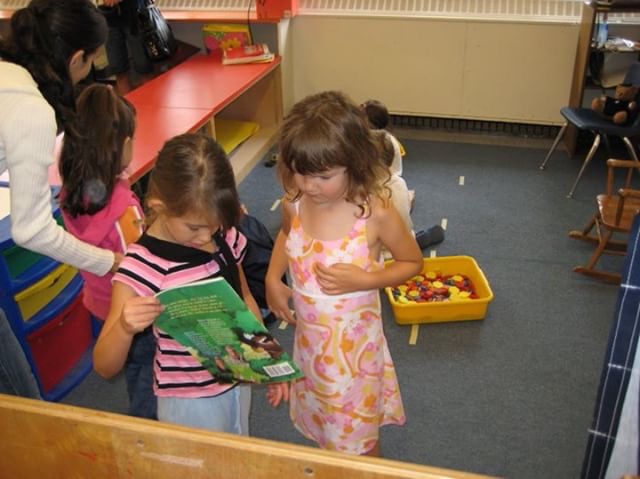
a photo of me and a friend in kindergarten – books were our technology
Describe what a flipped Flipped Classroom teaching model could look like at the grade level you’d like to teach along with some of the strengths and weaknesses of this approach for your grade level.
My approach to a flipped classroom model builds directly on the ideas outlined above. Recording dance or workout activities aligns naturally with a flipped classroom, as students can engage with instructional content outside of class and use class time for active application. PHE is already unique in that it exists outside the traditional desk-based classroom, and incorporating technology further strengthens the flipped model in a movement-focused subject.
In a future PHE classroom, I envision beginning a dance unit by having students watch short videos demonstrating basic or classic dance moves. This would give students a foundational understanding of movements they could later incorporate into their own videos. Rather than assigning a task without preparation, students would first build confidence through guided exposure.
Next, students could rotate through dance circuit stations during class time, with each station focusing on a specific movement (e.g., grapevine, box step, etc). These pre-activity videos and stations would help students feel prepared and capable of recording their own performances with confidence.
A typical in-class structure for this flipped model could include:
- Students practicing and refining movements
- Peer sharing and feedback
- Teacher support and formative feedback as needed
- Time during class to record videos, reducing pressure outside of school
This flipped approach works well in PHE because it prioritizes student-centred learning and active participation. The teacher acts as a facilitator rather than the focal point of instruction. Even during movement circuits, the teacher scaffolds the learning environment while students take ownership of their progress. This model supports diverse learning styles and pacing, while also promoting self-esteem and confidence.
In subjects like PHE, I strongly support the flipped classroom model. It emphasizes that teachers are not meant to lead from the front with students passively following, but rather to provide tools and guidance that allow students to direct their own learning.
One important consideration for the self-recording assignment is student comfort. If students feel uncomfortable recording at school, they could be given the option to complete the task at home. Additionally, introducing this type of assignment early in the school year helps normalize multiple attempts and revisions, reinforcing that learning is a process. If students are unhappy with their first submission, they are encouraged to revise and improve. Establishing this expectation early helps create an equitable, inclusive, and supportive classroom culture for the entire year.
A flipped classroom model in higher education: a review of the evidence across disciplines.http://Al-Samarraie, H., Shamsuddin, A., & Alzahrani, A. I. (2020). A flipped classroom model in higher education: a review of the evidence across disciplines. Educational Technology Research and Development, 68(3), 1017-1051.
International review of research in open and distributed learninghttp://Cabı, E. (2018). The impact of the flipped classroom model on students’ academic achievement. International review of research in open and distributed learning, 19(3).
This Blog Post is an original thought and has been edited for spelling, grammar and fluidity with ChatGPT.
OpenAI. (2026). ChatGPT (GPT-5.2) [Large language model]. https://chat.openai.com/