MC's 336 Blog

My Learning Portfolio for EDCI 336

Final Weekly Reflection

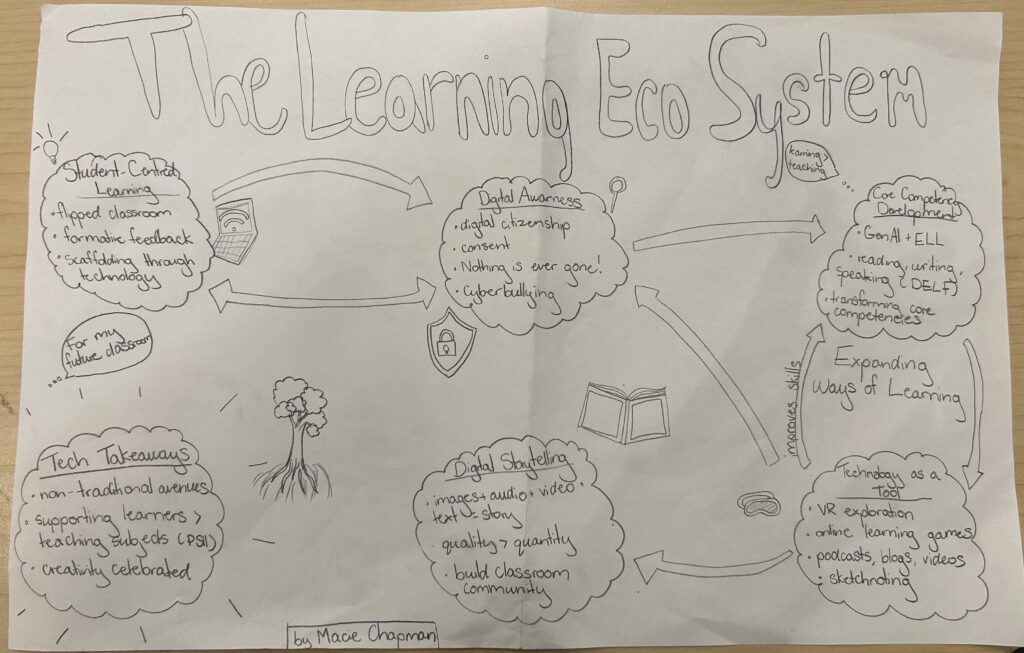
This is what I came up with for my final sketchnote. What I hoped to achieve with this sketch was to visualize how technology and education are intertwined. For example, a student cannot use technology as a tool without digital awareness. Or student-centred learning cannot happen without developing the core competencies beforehand. All of this to say that technology is a really powerful tool for the classroom, as it offers unique experiences for students to be creative and independent. However, it is still important to educate our classes on the power of the internet and how to use it safely. Furthermore, we as educators cannot solely rely on tech to teach for us; we always need to be prepared and have content ready to be delivered physically. To me, technology is a tool to help assist, but not teach on my behalf.

Final Free Inquiry

Did you enjoy the free inquiry topic you chose as much as you expected?

Honestly, I didn’t love the free inquiry project I chose. I think in hindsight I could’ve picked something that I already have to do daily, like cooking, and challenge myself in that way to do something creative. I think I would’ve enjoyed experimenting with gluten-free cooking. However, adding something to my already busy life was not that practical. I did not have that much extra time to dedicate to juggling, so I didn’t progress as quickly as I would’ve liked. Although I did succeed in juggling by the very last week, I think I could’ve done it a lot earlier if I had the time. 

What advice would you give yourself if you could send a message back to yourself at the beginning of the semester?

I would’ve given myself the advice that I don’t need to choose something flashy or out of the box. Just to choose something I am passionate about and that is realistic for my capacity as a student, athlete and part-time lifeguard. No one cares if I can or can’t juggle – as long as I am enjoying my free inquiry project, that’s all that matters. This project was for me and no one else. So if I were to redo this project, I would’ve chosen something I was more passionate about, and that also fit into my schedule better.

What did you enjoy most about your inquiry?

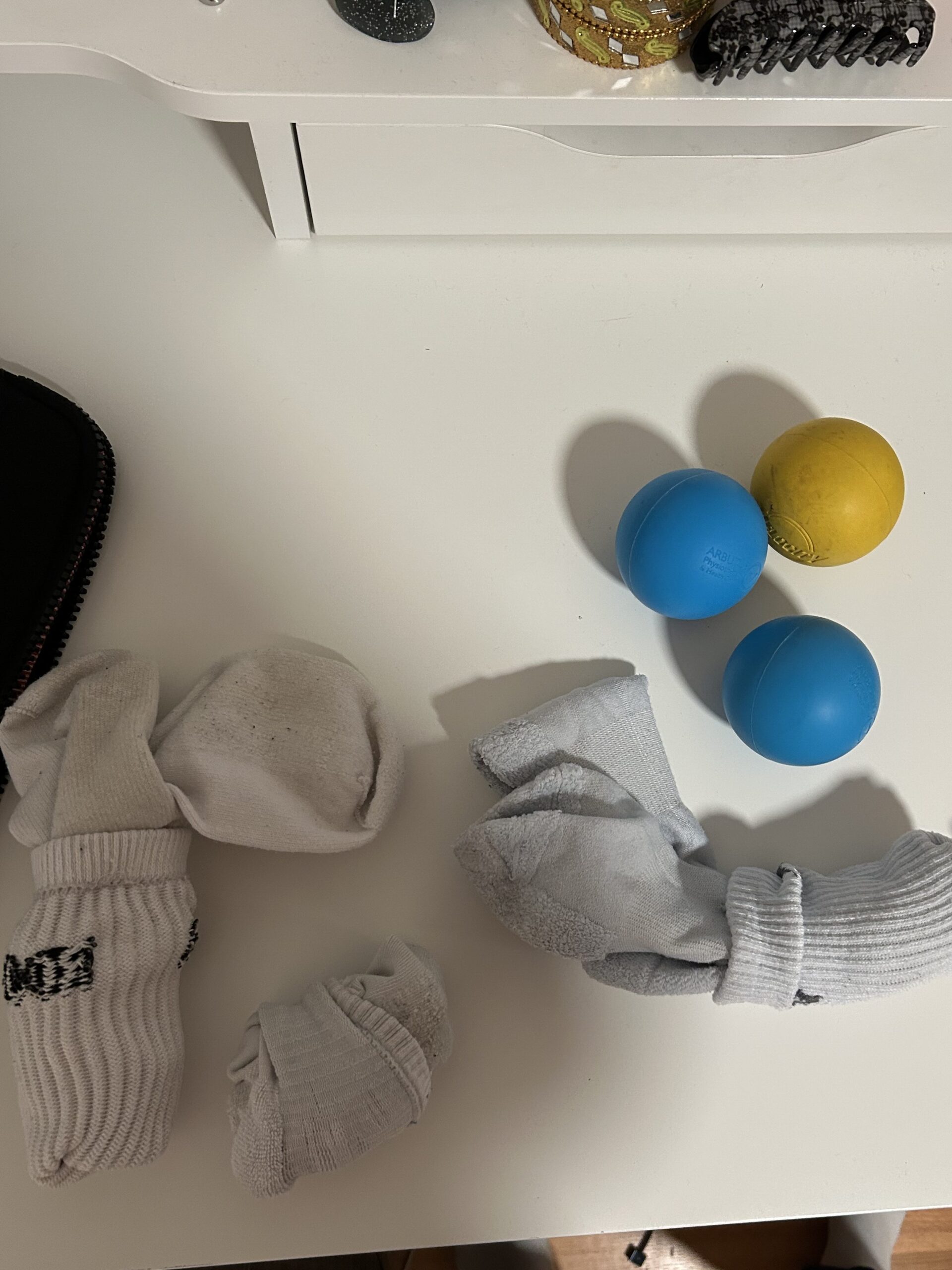
What I enjoyed most about my inquiry was talking to other people about it. I started new conversations with people I’ve never talked to before about juggling. For example, one of the guys I work with at the pool is a really good juggler, and he gave me some tips about juggling, like using socks to start. If we hadn’t bonded over juggling, I’m not sure if we would’ve had another chance to connect. I also liked how I could learn about other people’s projects. I never knew Kas was so into making sourdough until I read her blog, and as a result, we began to chat more about bread-making. She even suggested some gluten-free recipe ideas for me to try out on my own sourdough!

Weekly Reflection #9

blackred iStock image

After today’s class, I immediately went online and started deleting and deactivating accounts that I made forever ago. It made me realize how much of a digital footprint we build throughout our lives without even thinking about it. As a future teacher, I know that students will likely search my name out of curiosity, because I’ve for sure done that, so I wanted to make sure that what they find reflects me in a light that I am okay with. For example, I had an old volleyball recruiting profile from high school that I couldn’t remove on my own. I actually ended up calling Bob from Illinois, who works for the company, to have it taken down, which shows how permanent online content can be. This was super eye-opening for me – I made that when I was in high school, and it’s still around.

At the same time, not everything online needs to be erased. There is still content like old university volleyball roster photos and achievements that I don’t necessarily want gone. Sure, they’re outdated, but they’re also not negative; in fact, they highlight moments that I’m proud of! As a future PHE teacher, this could even be a positive, as students may see my background in sport and better acknowledge the experience I bring to the classroom.

During my time as a high school student, it was at the peak of this huge shift in how much adolescents are using technology. Although AI hadn’t taken off yet (thank goodness), we were still navigating all of the new and addictive apps that were coming out (Snapchat, Instagram, TikTok). When discussing online consent and privacy, it stood out to me that when we post on these apps, we never really ask the people we tag or post to. In a high school setting, specifically, this is something that can have real consequences because most students aren’t conscious of the impact consent has in digital spaces. As a future teacher, I want to work digital citizenship into my curriculum so that students are in the know about topics that matter but often fly under the radar. Here is an example of a resource created by Abbey Gillette, an SD 62 teacher.

Overall, from everything we covered this week, my main takeaway was that a digital footprint isn’t something we need to “clean up,” but something we need to shape intentionally. Starting with our students who are the most impressionable as they navigate the ins and outs of digital citizenship.

This Blog Post is an original thought and has been edited for spelling, grammar and fluidity with ChatGPT.

OpenAI. (2026). ChatGPT (GPT-5.2) [Large language model]. https://chat.openai.com/

How can digital platforms support skill development, reflection, and student voice in PHE?

istockphoto

As I have observed in my Link2Practice school, technology is increasingly common not only in typical classrooms but also in Physical and Health Education (PHE). While this subject often focuses on movement and physical literacy, digital platforms can also play an important role in supporting all types of learners. Tools like video analysis, fitness trackers, and online reflections can help students monitor and think more deeply about their learning. Digital tools also give students more creative opportunities to share their ideas and take ownership of their learning. This podcast explores how technology can support skill development, reflection, and student voice in PHE, while considering some of the obvious challenges that can arise when incorporating technology into a movement-based classroom.

This Blog Post is an original thought and has been edited for spelling, grammar and fluidity with ChatGPT.

OpenAI. (2026). ChatGPT (GPT-5.2) [Large language model]. https://chat.openai.com/

Resources

Cui, Z., Song, Y., & Du, X. (2024). Multilevel modeling of technology use, student engagement, and fitness outcomes in physical education classes. Frontiers in Psychology, 15. https://doi.org/10.3389/fpsyg.2024.1458899

Physical and Health Education Canada. (2025, May 26). Incorporating technology into physical education: Enhancing engagement and learning. https://phecanada.ca/professional-learning/journal/incorporating-technology-physical-education-enhancing-engagement-and

Physical and Health Education Canada. (2024, February 6). Ways to include digital literacy in physical and health education. https://phecanada.ca/professional-learning/journal/ways-include-digital-literacy-physical-and-health-education

Gopher Sport. (n.d.). Using video analysis in PE (PE Express Podcast, Episode 25). https://blog.gophersport.com/using-video-analysis-in-pe-pe-express-podcast-ep-25/

Free Inquiry #3

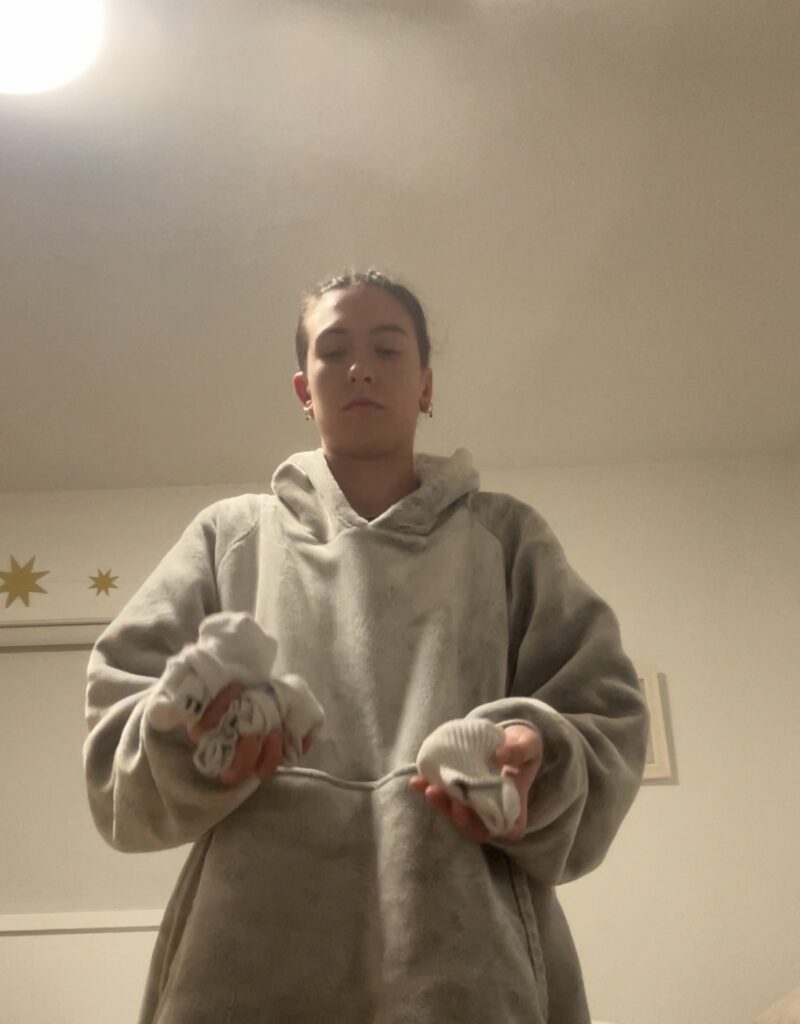
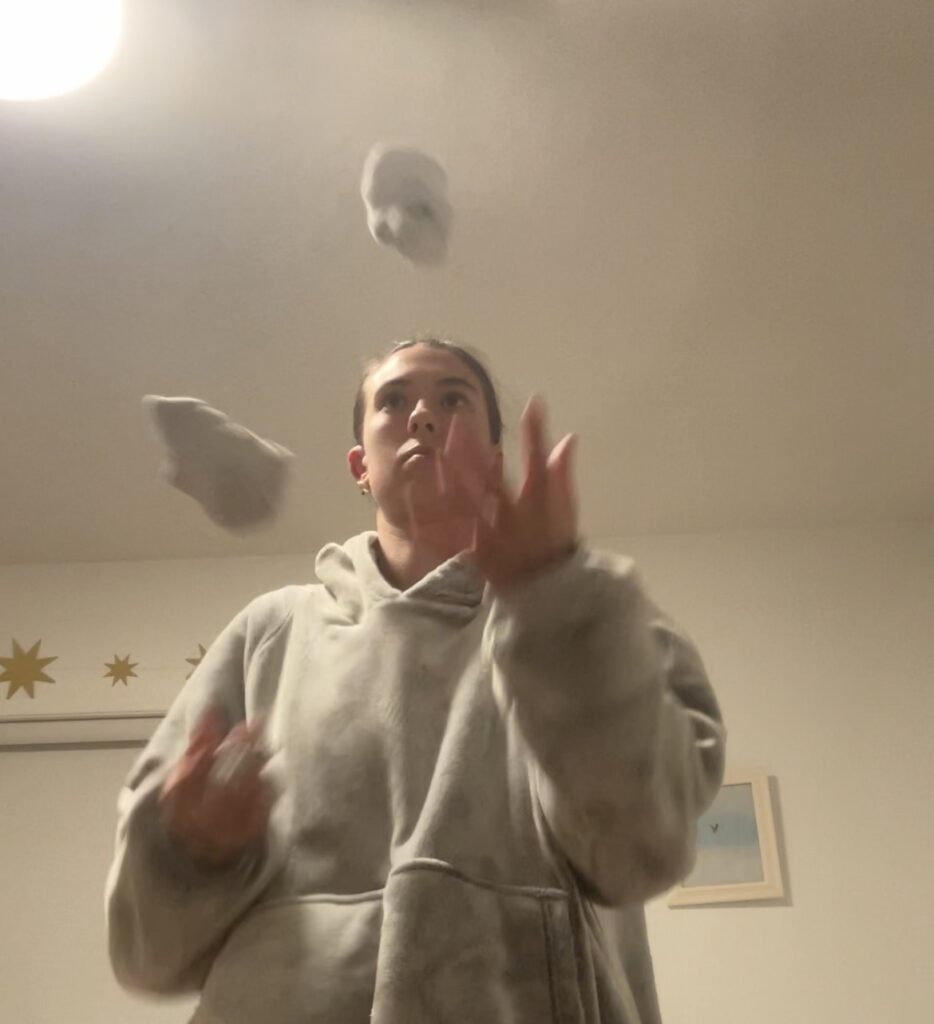
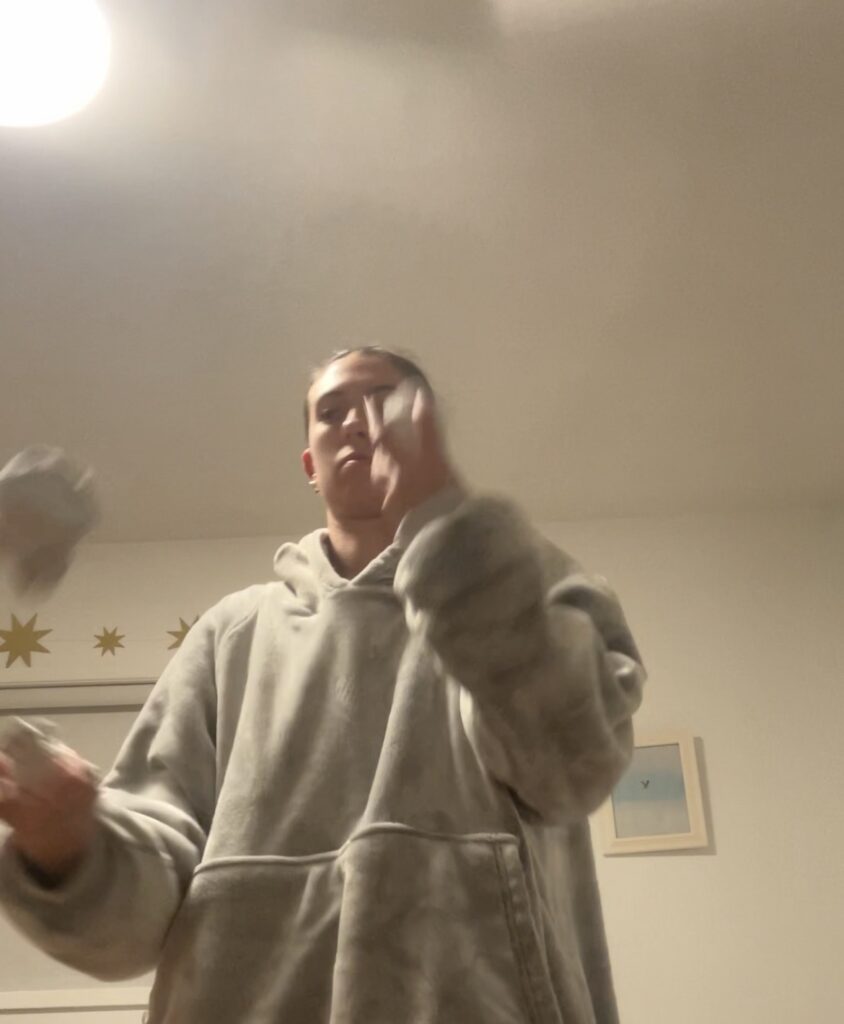
*screenshots from a video I recorded of me juggling

Voice Memo transcription:

This has been my third week doing my juggling free inquiry project. Honestly, I’ve been a hit a bit of a mental block and have been a little bit frustrated because I have gone from juggling with the heavier balls back to socks because I wasn’t able to get the pattern down. And now still with socks, it’s still difficult. 
When I took the gymnastics class at UVic, we started with scarves, but the teacher also went through step by step how to juggle visually, and although I’ve watched YouTube videos, seeing someone do it really made the difference for me.

I think moving forward to next week, I need to find someone who knows how to juggle and watch them visually and also get a hold of some scarves, because I think just slowing down the pace will help me get a better grasp before I progress back to socks. But I definitely like socks over the full balls yet, just because they are softer and are a little bit more forgiving. 


While rewatching the video I recorded of myself juggling, I noticed that I lost the socks at the peak, and the socks slowly started moving to the left. So I think when I’m starting, I’m just tossing the first sock out of my right hand too far left. So that is a minor fix that I can change to enhance my juggling.

Weekly Reflection #6

Augsburg University

Are there any digital accessibility practices that you often see being missed? Are there any that you know YOU often miss?

Voice Memo transcription:

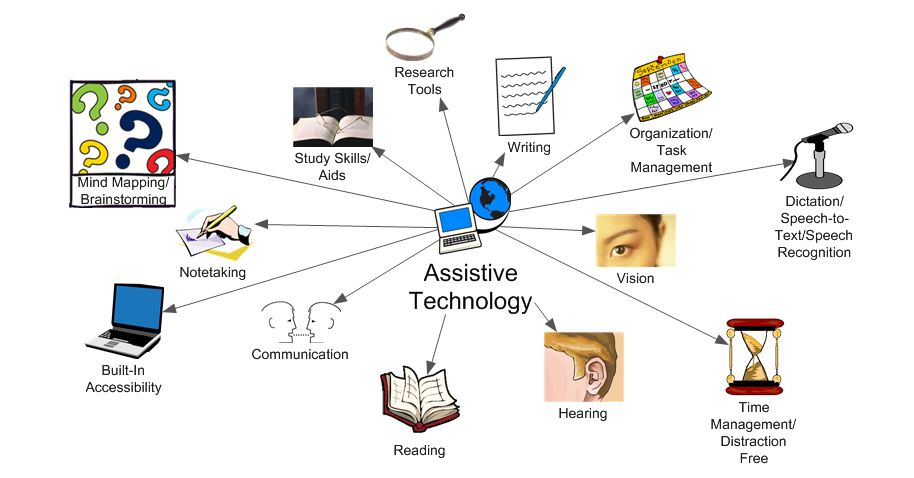
Reading about assistive technology and intentionality in technology made me realize how often digital accessibility is treated as an afterthought in the classroom rather than as a foundation. And while many teachers are familiar with adding captions or texts, there are often more subtle practises that are frequently overlooked. One of these is meaningful link text. So, instead of writing descriptive links like download the course outline, It is common to see vague phrases like click here. For users who navigate this by just pulling up a list of links, generic words like “click here” makes it difficult to understand where each link leads. Another overlooked practice that the assistive technology article talked about was the use of proper heading structures.
And sometimes we like to use these to make it more appealing to see where information is going and to break it up. But it’s not always done correctly, and people reading our blogs really rely on these structures to navigate the content officially. So they must be present.


Why do you think many digital accessibility practices aren’t more well-known or commonly used?

Voice Memo transcription:

I think many digital accessibility practices aren’t more widely known because accessibility is often framed as a technical add-on rather than a core principle in the design of technology. In teacher education, accessibility can almost feel like another requirement layered on top of our already rather demanding workload, but when educators aren’t juggling their curriculum, their assessment, and cluster management, accessibility can kind of seem more like a secondary aspect rather than foundational. There is also a misconception that accessibility only benefits a minority group of students, but in reality, accessible design supports everyone. 
From learners who access content on mobile devices, students who are in noisy environments who rely on captions, or maybe those with injuries that affect their ability to use a mouse. However, accessibility barriers are invisible to those who don’t expect them or encounter them on a daily basis; it becomes really easy to assume that content is inclusive, just because it appears organized.

Weekly Reflection #5

Idéllo Newsletter

This is a transcript from a Voice Memo

So this week, instead of having class, we were encouraged to attend a Pro D Day workshop for professional development. The one that I chose was an introduction for K to 7 French immersion teachers. I chose this one because although I’m not necessarily planning on teaching K to grade 7, I still thought that they would offer some really good resources, and honestly, they could definitely be used at the grade 9 level or even just core French, because this is for French immersion students, and they already know the language, but for core French students, I think this would be super digestible for those all the way until probably about grade 10 or 11. 


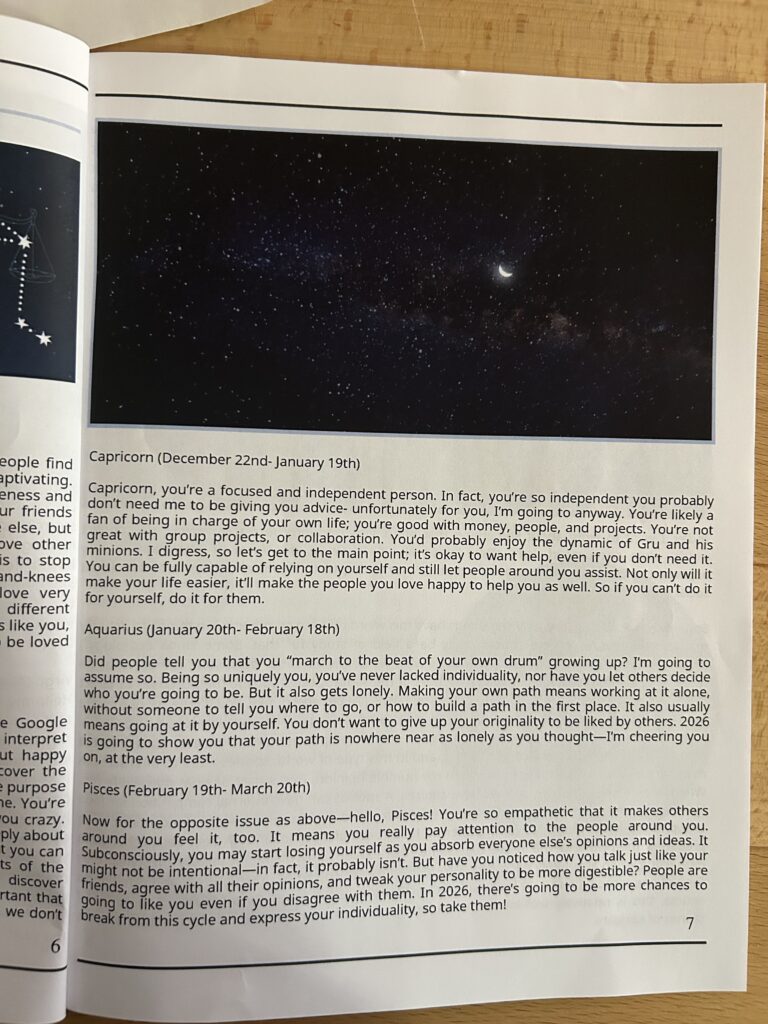
This Pro D workshop was presented by Idéllo’s Sophie Dion and Heather Daly. Essentially, to sum up what it is, it’s a monthly newsletter, and each month has different resources that highlight the specific events surrounding that month. For example, this month highlights Black History Month as well as the Olympic Games.

It is a resource that is completely funded by the Ministry of Education, and within each newsletter, it’s broken down into learning targets. For example, math, literacy, science, social studies, and art. 
And they even have sections for core French, intensive French, and French immersion.

I think this is a really awesome resource because it breaks down french information; in the past, the langauge has been very colonized. 
And it’s learning purpose use to be giving grammar tests over and over until a student could obtain the content. However, Idéllo is breaking down learning into fun and engaging ways. I know that if I were back in grade 7, I would have loved getting one of these monthly newsletters to keep in class.

Something I could see myself doing in my future classroom is getting a subscription each month from Idéllo and getting a physical copy, and kind of having a bookshelf in the classroom where students can go read. Each month, past and present. And I don’t know, just kind of build a network of resources because this is pretty interesting stuff, like, who wouldn’t like to know about the Olympics that are happening right now? 


This is the link to the entire 9 page newsletter by Idéllo

Free Inquiry #2

Voice recording transcript:

So for this week, for my free inquiry project, I wanted to take juggling to the next level, but honestly, it was a pretty busy week for me with volleyball, so I didn’t get to do as much as I wanted, but honestly, I think this is a really cool project because I don’t need to be making leaps and downs every single week. I just need to like learn a little bit more, whether that be practising it or just building my base level of knowledge before. I get into juggling. 
So what I did was watch the same YouTube video that I attached in free inquiry number one. And I just watched the next 30 seconds of it, which, um, just added on. So instead of just one ball juggling, it was two. 
Um, kind of just tossing them up and down. It was it wasn’t too challenging, but yeah, I think it was good. And then, Watch that video and practice my 2 ball juggling. 
Um, I was trying it with sock still because they fall a little bit softer to catch, but I think for next week, I want to go to the McKinnon equipment desk and rent scarves. And then try for 3 because I think they’ll just fall so much slower that I’ll really be able to get the timing down and I won’t get as frustrated. One thing that I’ve come to notice about taking on something that I have learnt, but have unlearned, is that I’m a competitive person, and I usually don’t, that doesn’t happen to me often, once I learn something, it sticks. 
So for this to be something that I’ve learned and I could do to now not being able to do it, it’s really throwing me for a loop. But in a good way, like, I like that I’m being challenged through this project. So yeah. 
That’s what I did this week. It was a little bit of a slower week, but, um, yeah, I am happy that I still got to use new technology like this voice memos transcript. I think that’s really awesome. 
So, yep, just building on that and we’ll see you in week three.

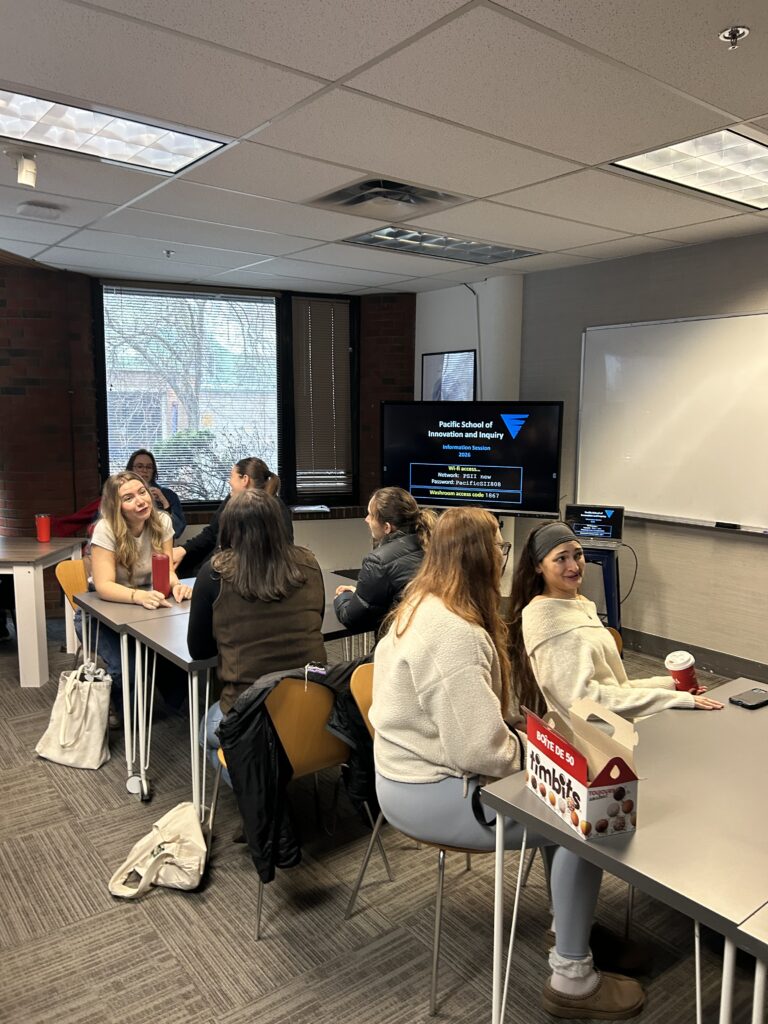
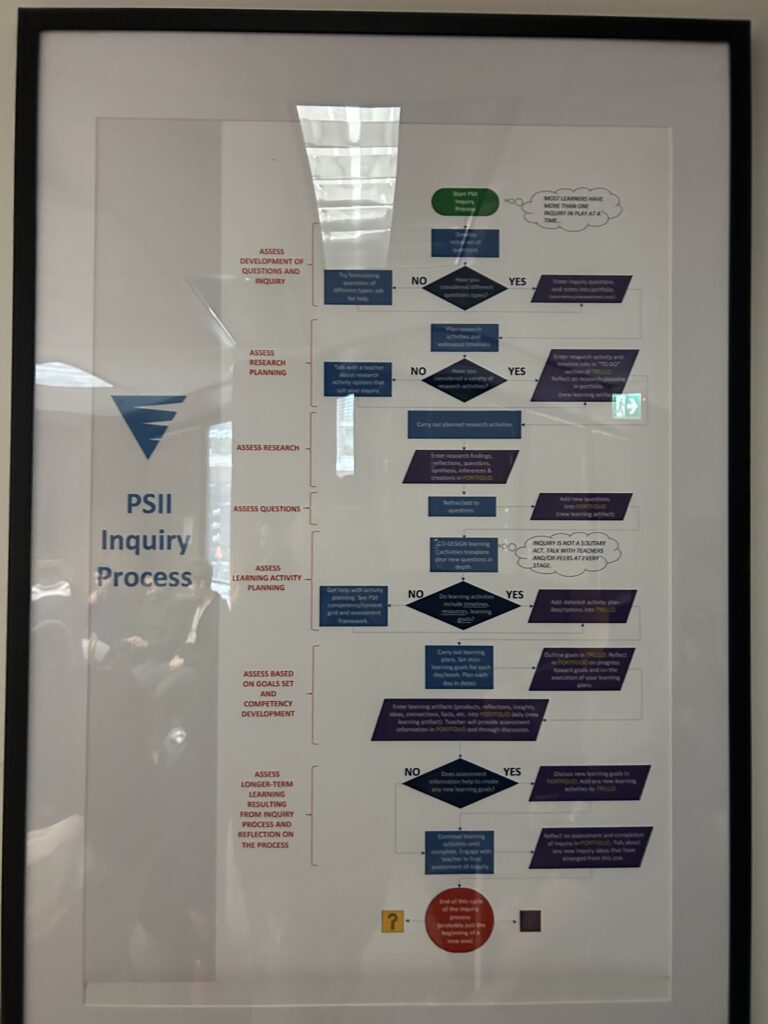
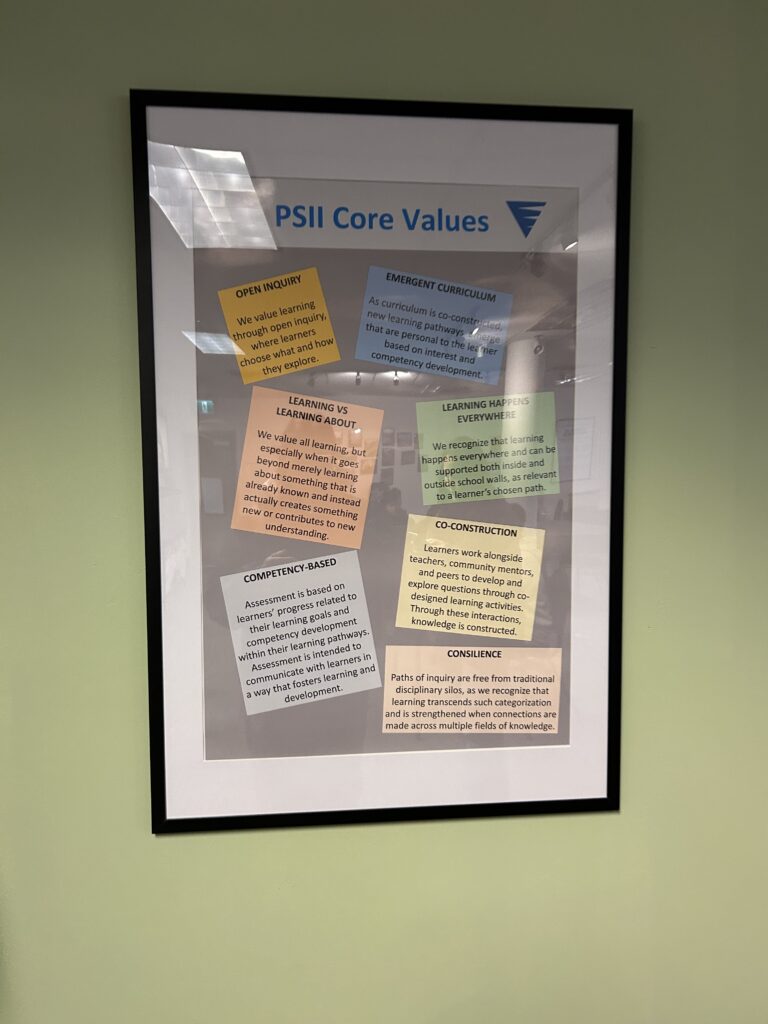
Weekly Reflection #4 – PSII

The following is a transcript of a voice note I recorded following our visit to PSII. Unfortunately I wasn’t able to upload the video as an MP4 – I would love to learn how to do that in this course:)

So today we visited the Pacific School of Innovation and Inquiry, and I thought it was a pretty neat concept. I had never considered that you could take all these competencies and not associate like a grade or a rigid structure to them, and instead take the foundations of what each subject is about, the competency and what those achieve, and just turn everything into like a student centred approach, where it’s all driven by their own inquiry. Um, I thought it was really neat specifically. 
They were talking about languages because I’m going to be a languages teacher and how that one boy wanted to learn Serbian, but no one at the school, no, knew how to teach Serbian, and so instead he went and did his own research, and that was his inquiry project, and then taught everyone else Serbian, um, and the example that Jeff gave was that he put, um, Serbian words around the whole school. Like wall and door. Um, and he he progressed really fast. 
So I thought that was super neat. I remember back to when I took French and it was just all like grammar tests over and over and teachers thought that if they could just pound like grammar into your system, that it would just click and you could be able to do it like a robot. But honestly, like it made people just despise languages and French and just the whole kind of colonial system, but I think, like, if I had this approach, I would have taken something I’m passionate about. 
I’m pretty passionate about like sports and athletics and I could have done something with French, like learning the French terms for volleyball. Um, because they’re different, like, um, a passer in, um, like English volleyball is the person that takes the 1st contact that bumps the ball. But in Montreal and in Quebec. 
The passer is the setter who takes the 2nd contact and passes to the hitters. Um, It’s just something I picked up when I did um, the Explorer program for 5 weeks in Quebec in 2023. But yeah, I was super impressed by this learning style. 
Um, I think the only thing that I would personally struggle with is a big part of my identity in school was athletics. And being on a team, I was on volleyball team basketball team, soccer team, ultimate team, and it wasn’t always the sports that drew me to these places, but it was more the people and the instant friendships and camaraderie and life skills you just gain from being on a sports team. Um, I wish I asked if the students had the opportunity to go to another school, like after school situation, and be a part of a different schools team. 
But, yeah, it was, it was very interesting and I did like how they could go to like the Y or Craig X for free and they had built-in programs that a past student came back to give them like personal training program. And I think that is so awesome, but I don’t think that learning style would have worked for me. I think from a more like academic and competency standpoint. 
It would have been great to have all these opportunities to make something I’m passionate, like an inquiry project, but I do think that maybe just because of so much of my personal identity came from team sports, I wouldn’t have necessarily flourished to my full extent of the school. Um, I was curious about the funding. I asked Jeff. 
I was like, so what? Like, where does your funding come from? And he said that about 50% comes from the Ministry of Education, and then the rest is up to tuition, which is $8000 a year. 
Um, I know public schools are free, but, like, the ratio and just what kids are, like, able to do at this school is so impressive that I do think like $8000 will go a long way, like that is a good, a steal, almost, for the education and stuff they’re learning here. Um, If I had a child and was going through this program, I think that putting them in this space for like grade 9 would be really awesome and help them like kind of acclimatize and be creative and then take that and move them into like more of the public school setting for the senior levels because I do think it’s important. Like universities really do look at grades, and I know sometimes people that go into more like STEM programs like really count on those high marks um. 
Um, but also just for the sports team aspect, like I said, but overall, I could definitely see myself applying some of these practises into my classroom, like giving students like a foundational base of knowledge, but then letting them pick how they want to show what they’ve learned because I do agree that I don’t think learning should just be pulling a bunch of marks and averaging them out, but just seeing how they’ve grown. over time. But yeah, those were my thoughts on the visit today and uh, super, super awesome. And yeah, I really appreciate the visit.

Week 1 – Introduction

IStock juggling PDF

For my free inquiry project, I will be learning how to juggle. This project focuses on developing new skills through observation, repetition and reflection.

I chose juggling because it was a skill I learnt during a gymnastics class I took in 2023 as part of my PHE degree from UVIC. Before that course, I had never learned how to juggle. In the class, we scaffolded the skill by starting with scarves and gradually adding balls until we were juggling. At the very end of the course I was finally able to succeed, which was an incredibly rewarding experience. Unfortunately, after the course ended, I lost the skill and never had the time to relearn it. Until now. This inquiry project is a meaningful way for me to return to a skill that I once learned while also exploring how skill acquisition works through a lifelong learning perspective.

My initial goals for this project are to:

  • find appropriate juggling materials for progressions (scarves, socks, balls)
  • discover media resources to assist my learning targets

To support the learning goals, I have found instructional videos, particularly on YouTube. By following these videos, it will help me make a foundation of using proper technique to build upwards to 3-ball juggling.

To begin, I am using this video (only until the 35 second mark)

My next step is to start juggling scarves or socks because they will fall much slower and give me more time to get the base pattern down.

Stay tuned for week 2!

« Older posts

© 2026 MC's 336 Blog

Theme by Anders NorenUp ↑